
From a niche sector to a fully-fledged economy
The creator economy is a new method of creating value in the digital age. It transforms content creators into entrepreneurs who can generate revenue from their audiences through digital platforms. Long confined to a niche sector, the creator economy has gradually established itself as a fully-fledged economic model. What was once an amateur pursuit or a way to top up income has now evolved into a sustainable economic model that can generate jobs, drive investment, and support large-scale brand strategies.
The Creator Economy: a dynamic sector
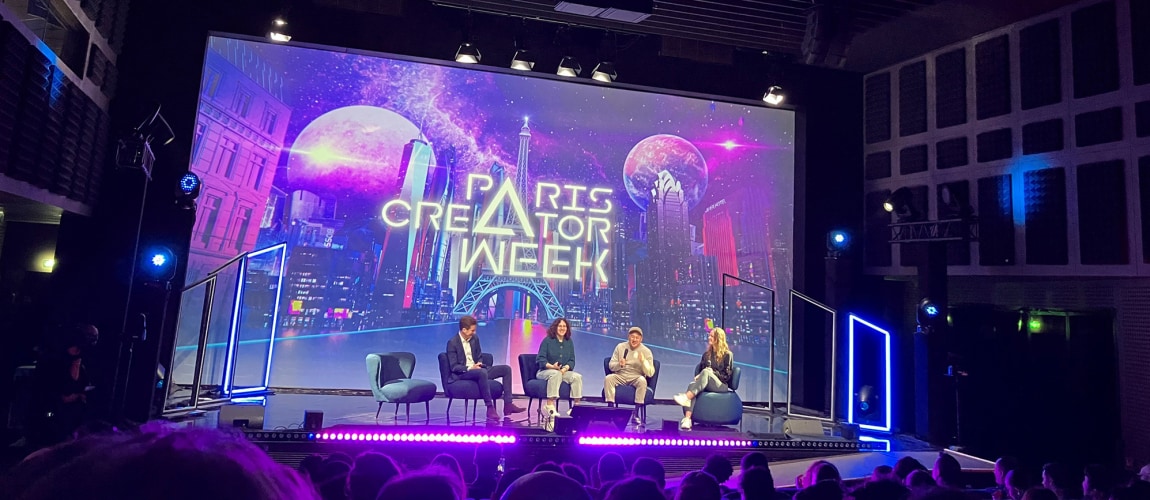
The second edition of Paris Creator Week, held in partnership with BNP Paribas, took place on 9–10 December 2025. The event aimed to deepen understanding of the impact of this rapidly growing market. According to the study conducted by Coherent Market Insights for Paris Creator Week, the European creator economy was already worth $32.8 billion in 2025 (€28 billion).
In France, the creator economy generated nearly $8.1 billion in 2025, up 20% on the previous year. The sector is expected to continue growing, reaching nearly $157.3 billion (€135 billion) in Europe by 2032. This represents an average annual growth rate of 25.1%.
Creator Economy in France : Key figures
In 2025, a value generated content creators in France
direct jobs are generated by the content creator market
Are content creators entrepreneurs like any other?
The influencer market is booming, already accounting for 0.16% of France's GDP and 1.7 million indirect jobs. Content creators are expanding their income sources, leading to a more organised and professional sector. Meanwhile, European regulations are starting to define the ecosystem. As the only partner bank among the fifty exhibitors at the second Paris Creator Week, our experts took part in panel discussions to share our vision of providing bespoke support to entrepreneurs, particularly content creators.
A team of specialized advisors
Alexandre Jacquemin is Head of Professional Clients Market in the Paris region. He manages a team of specialized advisors based in an Ile-de-France branch, who are dedicated to supporting content creators. This system extends from the branch to the Image & Media Business Centre via the Entrepreneurs’ Space, providing support at every stage of their journey.
This team is unique in the French banking landscape and is designed to address the specific needs of these professionals, depending on their stage of development and activity.
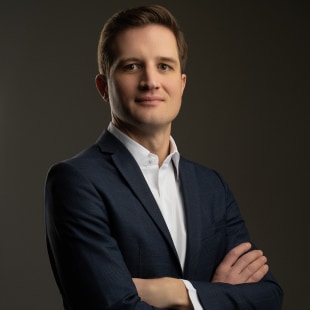
"Content creators do not fit into the usual categories of banks. Behind 100 project leaders, there are 100 different stories”. For him, the economy of content creators should not be viewed as merely “a fad”. “It's an economy that's rapidly taking shape with a business model that functions and generates profit."
Content creation - videos, photos, podcasts, articles, newsletters, etc. - is not limited to the act of producing and publishing. Behind every creator lies a complex ecosystem that transforms creativity into economic value: “A creator manages an audience, a brand, partners, sometimes even a team. In other words, they run a business, with all that this implies, such as structuring, financing, a clear strategy, a long-term vision and the ability to get the right people on board.” That’s where BNP Paribas come in. The goal is to build a lasting partnership with content creators and to cultivate shared expertise. As for the banker's expertise in the specific details of this activity and the content creator's ability to understand the key levers for growing their business and requesting funding: “Our role involves identifying and understanding the value of these intangible assets, evaluating the consistency of business models, and assisting those who are earnestly developing their projects and ambitions”.
To have a long-term vision
As it is standard practice, Alexandre notes that BNP Paribas evaluates a content creator's financial capacity and business structure before collaborating with them. This includes how revenue will be generated and how audience loyalty will be maintained. Alexandre Jacquemin adds: “The goal is not to complicate the life of the content creator, but rather to simplify it. BNP Paribas wants to be a trusted long-term partner and play a genuine advisory role”. This is important because, as he has already pointed out, content creators often lack sufficient support. “Some of them don't have an accountant, for example, and that's where we can also help them in our advisory role”. Furthermore, creative agencies also provide support, offering monitoring from production through to monetisation.
"Enhancing your credibility with stakeholders is crucial for building lasting trust, and surrounding yourself with people who share your long-term vision is vital."
How can the new creator economy be financed?
Revenue from platforms, premium content, sponsorships, partnerships, external funding and so on, make the creator economy particularly resilient. It is redefining the traditional codes of monetization.
During a panel discussion about financing the new creator economy, Florent Garcia, Director of the WAI by BNP Paribas programme, shared his insights. Having supported entrepreneurs and start-ups that have been BNP Paribas clients for several years, he drew an interesting parallel: “As a bank, we see many similarities between the creator economy and Tech. A few years ago, when a start-up entrepreneur walked into a bank to open an account or request funding, their ideas and business model were not necessarily understood. When you're an entrepreneur entering a new market, nobody really understands what you’re doing, but a bank like BNP Paribas, which supports societal change, can connect these creators with people who understand their model. It's a whole process of mutual education and learning”.
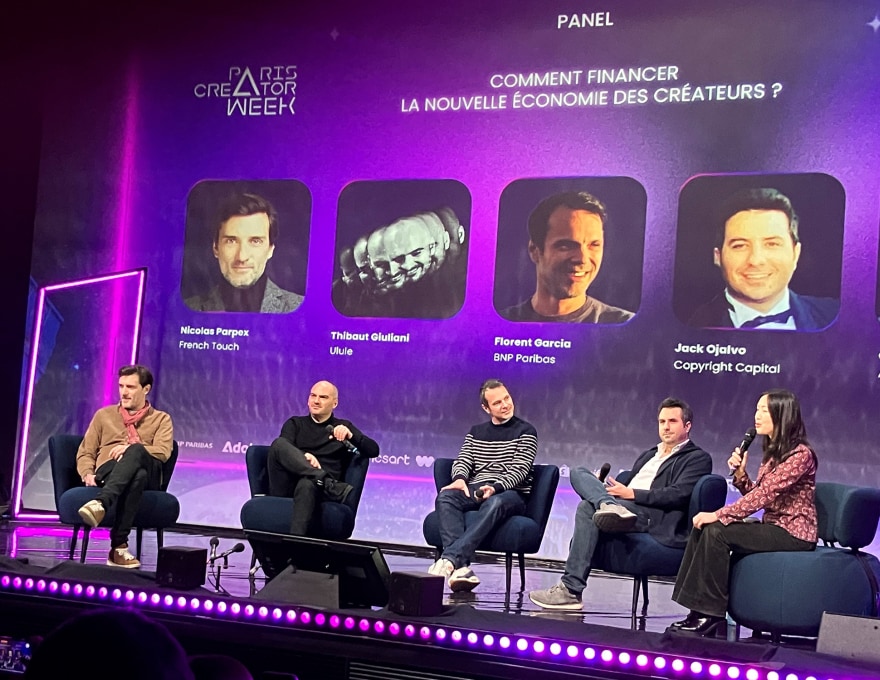
Florent Garcia (center) during the Paris Creator Week 2025
Unlike a generalist approach aimed at a broad audience, content creators' economies are becoming more vertically organised. For Florent Garcia, this represents a “vertical economy”. Creators build their value around specific niches, targeted expertise, and engaged communities.
The role of financiers is not to outpace content creators, but rather to put in place suitable mechanisms to support this rapidly growing economy. “Today, creators have what many brands aspire to: visibility on platforms and an engaged community. However, they are still seeking financial partners who understand their business models, multi-platform revenue streams, risks and, above all, growth potential.”
In terms of “metrics”, communities are often highlighted, but the objective is rather to finance their transition towards a sustainable business. Given the speed of change in this sector, we must be able to finance projects and all other initiatives swiftly. “Managing risk is our daily business; it's a classic balancing act for a bank. However, there is another challenge to overcome, which is to move from a single project or idea to a more comprehensive one, such as a business or entrepreneurial venture”.
BNP Paribas supports the Cultural and Creative Industries
BNP Paribas, which has been financing cinema for over 100 years, currently supports nearly one in two films in France. What is less well known is that, beyond cinema, the Bank covers all of the Cultural and Creative Industries (CCIs). Some sectors, such as video games and animation, require highly specialised financing from our bankers. However, for some years now, we have also adapted and expanded this system to include the creator economy, employing several dedicated bankers. BNP Paribas supports all players in the Creator Economy, including talents, agencies, and online media, regardless of their size. As in the audiovisual sector, it is crucial to nurture talent from the beginning, offering guidance and suitable financing options. Claire-Hélène Massot, Deputy Head Media Department at BNP Paribas emphasises this point: “Content creators are true entrepreneurs. What distinguishes them, however, is that they embody their business with all the advantages (engagements from their community) and risks that come with it (volatility, psychosocial risks, etc.). Understanding their needs is therefore essential. So, beyond the conventional banking criteria (financial structure), our approach focuses on the quality of their assets (the creator's community). Our bankers focus not only on subscriber count but also on content recurrence, community engagement, and listening time, which are key to converting this asset into a sustainable business."
"The links between the two ecosystems: traditional media and the Creator Economy, which confirms the importance of incorporating it into our specialised media system.”

BNP Paribas at Médias en Seine 2026
The creator economy was also a topic of discussion at the 8th edition of Médias en Seine. This international event, which focuses on the future of media, took place on 15 January 2026. It brought together media professionals to discuss the theme of “New Worlds, New Powers”.
Claire-Hélène Massot, Deputy Head Media Department at BNP Paribas participated in a round table entitled: “When content creators accelerate the transformation of production”, alongside Alexia Laroche Joubert, Director of BANIJAY France.