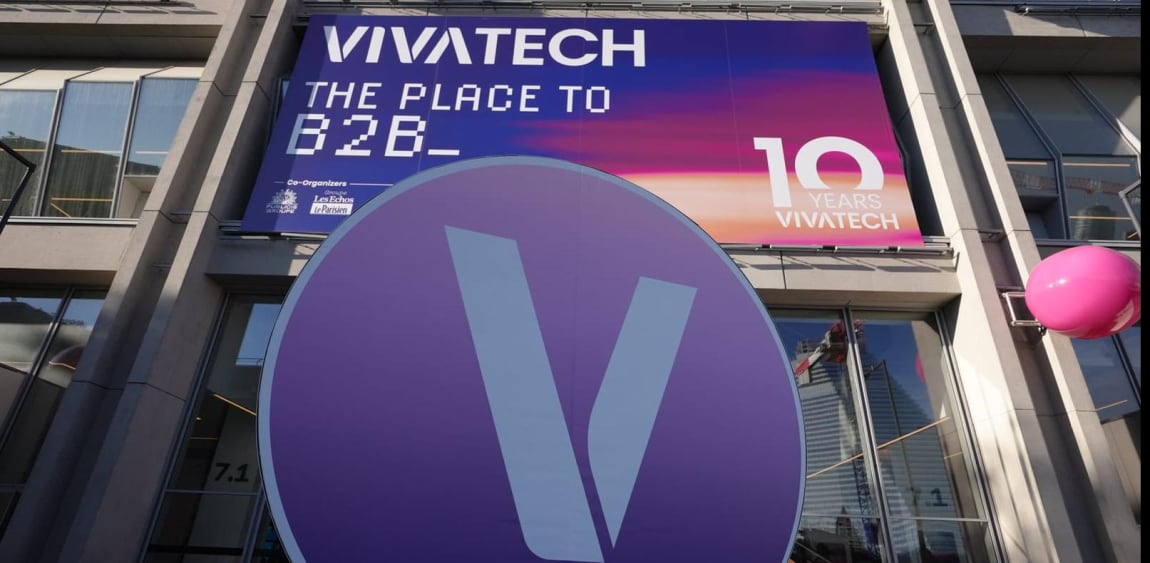
1. AI, Everywhere and for Everything
In 2026, AI is no longer just one vertical among many—it is the invisible backbone of the event. Healthcare, energy, robotics, brain sciences, quantum computing: no sector is immune. One of the key trends is the shift from conversational AI to physical AI, exemplified this year by a parade of humanoid robots capable of interacting in dozens of languages. Even the human brain is being targeted: NaoX Technologies, in partnership with BNP Paribas Développement, is developing technology capable of capturing brain data via simple headphones, without the need for bulky medical devices.
2. Agent-based AI in the Service of Banking Operations
AI is no longer content merely to respond—it takes action. BNP Paribas is already preparing the bank for the era of agent-based AI: AI systems capable of assisting, coordinating, and automating certain steps, always under human supervision and within a reinforced security framework. A concrete example already in pilot mode: KYC (Know Your Customer, the process of verifying the identity of new customers). An AI agent collects all available data on the prospect in advance to pre-fill their application, reduce customer friction, and improve the quality of compliance records. The goal is not to replace the advisor, but to free them from administrative tasks so they can focus on customer relations. A non-negotiable condition: AI that is responsible, explainable, and governed from the design phase onward. “You can’t do AI without responsible AI,” insists Michael de Toldi, Chief Analytics Officer at BNP Paribas Cardif, during a dedicated panel discussion.

Innovations Café, BNP Paribas VivaTech 2026
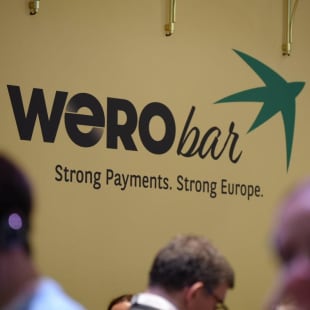
3. Wero: European Payment Sovereignty
“Our clients are looking for secure, simple, and fast solutions—that’s exactly what Wero is,” emphasizes Karine Munoz, Head of Sales and Communication at AXEPTA BNP Paribas. To date, 5 billion payments have been processed through the platform. By bringing together 16 banks from 5 countries around a shared wallet, the European Payment Initiative (EPI) has achieved a feat of coordination as much as it is a political accomplishment. BNP Paribas is one of the founding members of the EPI, and AXEPTA BNP Paribas, its brand dedicated to payment acceptance, was one of the first to integrate Wero into its payment page. With 54 million users, deployments at Air France, Orange, Decathlon, and Leclerc, and an expansion for BNP Paribas in Germany, Belgium, and Luxembourg, the seamless experience promised to consumers masks a fundamental challenge: having a credible local alternative to U.S. players is no longer optional.
4. Germany in the Spotlight: Europe Asserts Itself
This year, for the first time, a European nation—Germany—took center stage. With 800 m², the largest booth in VivaTech’s history, 200 startups, 14 federal states represented, and two federal ministers, the German delegation sent an unambiguous message. Digital Minister Karsten Wildberger summed it up at the opening of the event: “Europe can innovate, but it can also scale up.” AI applied to industry, hydrogen, electric mobility, resilient infrastructure… these are all areas where Europe intends to play a leading role.
5. Digital sovereignty: In Europe, we must “overcome national divides”
“70% of the European cloud is in the hands of American hyperscalers,” notes Lutz Diederichs, CEO of BNP Paribas Germany, during the conference Financing Digital Sovereignty: From Strategy to Execution, held on one of Viva Tech’s main stages. The situation he described is of the utmost importance: if Europe does not take control of AI, AI will take control of Europe. The executive insists that we must stop thinking on a country-by-country basis. “We are a European bank. We must move beyond national divides to act on a European scale.” BNP Paribas’ response: finance the European tech ecosystem, build alliances, and rely on sovereign players such as Mistral AI, whose partnership has just been extended for three years.
"70% of the European cloud is in the hands of American hyperscalers"
6. Blockchain: The Era of Industrialization
Blockchain is a shared, tamper-proof digital ledger that enables the exchange of assets (financial securities, debt, cash) directly between parties, without an intermediary. After ten years of experimentation, BNP Paribas is entering the industrial phase. “We are at a pivotal moment,” says Julien Causse, Head of Asset Foundry at BNP Paribas CIB. The missing link—a central bank digital currency—is currently being tested in Europe. In ten years, no one will talk about blockchain. It will simply be the infrastructure, just like the Internet is today.
7. Cybersecurity: Trust as a Strategic Asset
In a world of autonomous agents, big data, and AI-enhanced industrial robots, cybersecurity has risen to the level of a strategic business issue. Large companies face hundreds of attacks per week. While the threat is constant for everyone, it is asymmetrical: what barely affects a large corporation can bring down an SME or a sole practitioner. Protecting your access points and data means protecting your business. For BNP Paribas, cybersecurity is a driver of lasting trust, serving customers, employees, and innovation.
8. Women & Tech: Gender Parity Will Make AI More Effective
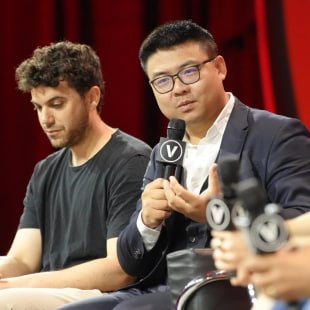
1% of investment will go to AI startups founded exclusively by women by 2025. Yet these companies demonstrate 20 to 30% greater resilience. BNP Paribas is committed: as an investor in the Sista Fund (€60 million, managed by the Bank), through annual gender reporting in financing dossiers, and via a dedicated loan program that does not require personal guarantees. But behind the funding inequalities, another warning is being sounded: “80% of the data used to train AI systems is biased in terms of gender parity,” emphasizes Inès Hamy, CEO of Octolo, during a roundtable discussion held at the BNP Paribas booth. As a result, these systems predominantly think in masculine terms. Concrete impacts include less accurate facial recognition for certain profiles, more difficult access to credit, and even less reliable detection of heart attacks in women. And these have real economic and social consequences for everyone.
9. Tech for Children
Technology is making its way into the early years of life—and not just for entertainment. Le Guardian, a Toulouse-based startup founded by two women, presented its standalone geolocation wristband for children ages 4 and up: an SOS button, voice messages, no smartphone required, and data hosted in France. A simple, useful, and independent device that illustrates a fundamental trend: technology must also be used to protect the most vulnerable.
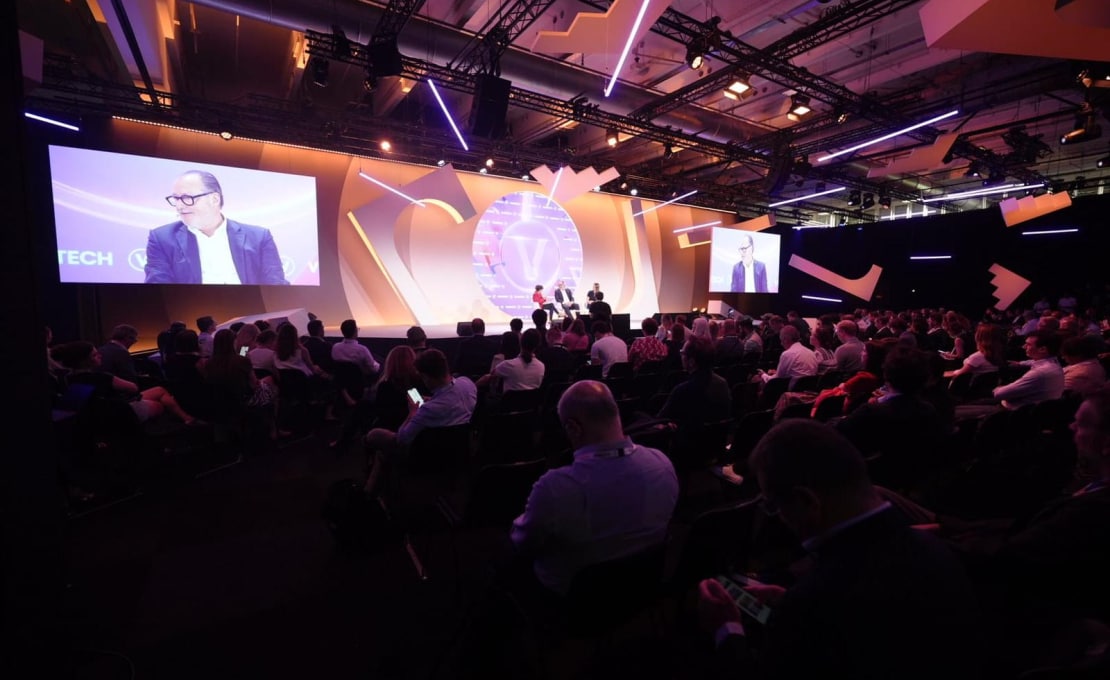
Main Stage, Viva Tech 2026
10. Agriculture & Climate: Tech in the Fields—and Beyond
Ten years after its creation, VivaTech is no longer content to merely herald the future; it is laying the first concrete foundations for it, with a conviction shared by BNP Paribas: that of a Europe determined to play its full role in the technological revolution, alongside major nations and key industry players.