
FAQ: Sustainable Finance

Recognised as a leading bank in sustainable finance, BNP Paribas answers questions about its actions and policies regarding CSR, financing the energy transition, inclusion and its role in society.

Our approach to responsible finance

  • Not at all. In fact, BNP Paribas primarily finances low carbon energy production. Furthermore, the Group has set a target to have 90% of its energy production financing dedicated to low carbon energies by 2030, with outstanding loans amounting to at least 40 billion euros.

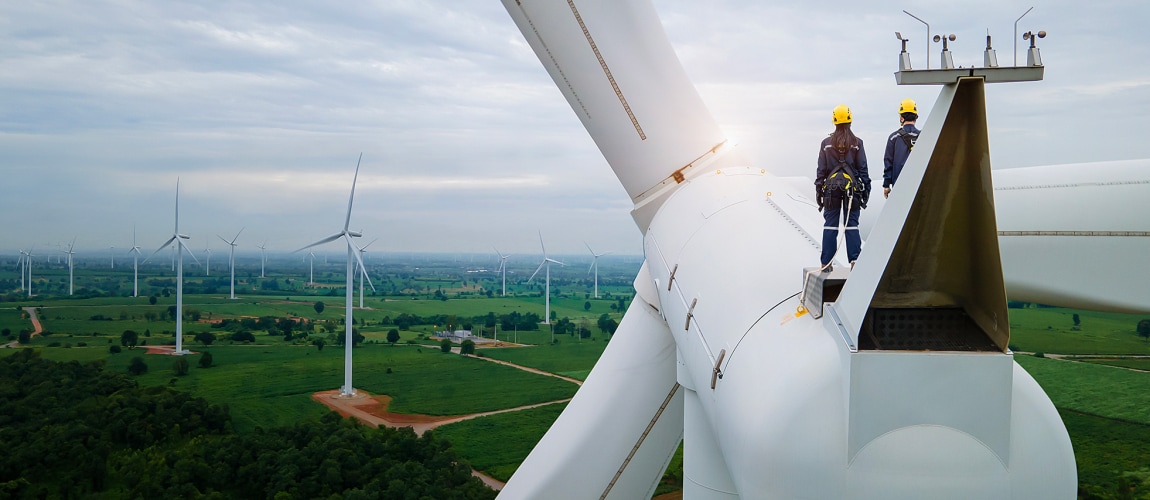
    At the end of September 2024, low carbon energies already accounted for 76% of the Group’s loan portfolio, totaling 36.8 billion euros. BNP Paribas is also supported by its Low-Carbon Transition Group, whose 250 expert bankers support renewable energy transactions worldwide to help clients in their transition. For example, since 2012, the Bank has financed 46 offshore wind farms with a total capacity of 27 GW, including 22 GW in Europe. This includes ambitious projects such as Baltica 2, which is set to become the largest wind farm in the Baltic Sea.

    For more information:

  • BNP Paribas supports impact entrepreneurs and impact companies by offering solutions tailored to each stage of their development. This support enables innovative companies with strong potential for growth to scale and expand their business operations. The Group is committed to helping entrepreneurs and businesses maximise their social and environmental impact, thereby contributing to a just and sustainable transition. BNP Paribas offers impact entrepreneurs and companies a variety of solutions to support their businesses, including:

    The “Act For Impact” programme, which celebrated its tenth anniversary in 2024, has 200 specialised BNP Paribas account managers that offer tailor-made solutions and support.

    The Positive Impact and Inclusion Business Accelerator (PIIBA) offers innovative financial solutions (such as impact contracts, in which the Group is a leader), impact measurement tools and social and financial inclusion services.

    BNP Paribas also invests in impact start-ups, via the fund co-managed by PIIBA and BNP Paribas Asset Management, or via the BNP Paribas Solar Impulse Venture Fund, the venture capital activity of BNP Paribas Développement or solidarity savings funds.

    Impact start-ups can also join the Group’s accelerators and be hosted with workspace at the BivwAk! and the WAI (We Are Innovation) by BNP Paribas.

    For more information:

  • For more than a decade, BNP Paribas has taken action to consider the risks associated with deforestation, as shown by the Group’s public position on natural capital and biodiversity, as well as the adoption of sector policies for sectors at risk for forests. This includes sector policies for palm oil, wood pulp and agriculture, with a particular focus on the beef and soy industries in the Brazilian Amazon and Cerrado, which are two particularly vulnerable regions. BNP Paribas believes that the commitment of financial institutions is one of the levers to support the transition of players in these sectors to more sustainable and resilient land-use models.

    Updated in 2021, BNP Paribas' Agriculture sector policy:

    • Encourages clients producing or purchasing beef or soy in the Amazon and Cerrado in Brazil to adopt a “zero deforestation” strategy and transparently demonstrate their progress by the end of 2025.
    • Provides financial products and services strictly to companies with a zero- deforestation strategy in their production and supply chains by the end of 2025.
    • Evaluates its clients by focusing on three pillars: Deforestation- and Conversion-Free (DCF) commitments, progress in the traceability of direct and indirect suppliers, and quality of reporting.

    Concrete results measured since 2021:

    • Soy industry: At the end of 2024, 97% of the volume produced or traded by BNP Paribas clients were in line with DCF criteria. In 2024, the client portfolio average reached 99.7% traceability for direct suppliers and 86% for indirect suppliers.
    • Beef industry: In 2025, BNP Paribas clients achieved full traceability across their direct and indirect supply chains.

    And after 2025?

    BNP Paribas maintains a regular dialogue with its clients regarding their understanding of the political and regulatory context. The Group's priority is to continue supporting clients in their efforts to maintain zero deforestation and zero conversion commitments and performance.

    By the end of 2026, BNP Paribas will have a complete overview of its clients’ 2025 performance, and thus their degree of alignment with the Group’s Agriculture sector policy, once all client 2025 annual reports and independent audits have been published.

    For more information: