Forgotten crises: understanding the issue
What is a "forgotten crisis"?
Lisy Piton (L.P.): For CARE, a "forgotten crisis" is a humanitarian emergency that affects at least one million people but is unfortunately receiving minimal media attention. We publish an annual report analysing online coverage of these crises in five languages: Arabic, English, French, German and Spanish. The 2025 findings are alarming: out of five million articles analysed, only ten crises were covered – down from 43 identified – and media attention plummeted by over 50% compared to 2024 (from 89,588 articles in 2024 to just 40,061 in 2025).

Why do you think these crises remain nearly invisible to the public?
L.P.: Several factors contribute to this invisibility. First, there’s a media logic at play: priority is given to sudden, high-impact events or those deemed "strategically relevant." Ongoing crises (such as those in the Central African Republic or Burundi, which have ranked among the most neglected humanitarian crisis for a decade) become so persistent that they fade from headlines. Security risks on the ground also deter outlets from sending journalists, limiting media coverage. Finally, there’s "media competition": in 2025, 80% of articles analysed focused on Gaza, Syria, and Venezuela. While this attention is wholly justified, it overshadows other crises that equally demand urgent action.
What are the most common causes of these crises?
L.P.: The humanitarian crises highlighted by our report stem from three interconnected and chronic factors that deepen the vulnerability of populations: climate change now impacts every crisis in our ranking. Historic droughts (e.g. in Namibia and Zimbabwe), floods (e.g. in Madagascar and Honduras) or cyclones devastate crops as well as infrastructure and fuel disease outbreaks, despite these countries contributing minimally to global CO₂ emissions; conflicts and political instability weaken a state and turn climate shocks into full-blown disasters, as in Madagascar, where the unrest in late 2025 exacerbated an already dire humanitarian situation; poverty and agricultural dependence also result in fragile economies, notably in countries heavily reliant on subsistence farming. Since local populations and families lack financial buffers to survive poor harvests, a single failed crop season can plunge millions into malnutrition and food insecurity.
The Rescue & Recover Fund: committed today ... and (for) tomorrow
Created in 2012, the Rescue & Recover Fund – the BNP Paribas Group's endowment fund – collects donations from BNP Paribas employees during dedicated fundraising campaigns throughout the year. (In France, BNP Paribas retirees (and being ADR members) as well as the Group's Commercial, Personal Banking & Services in France (BCEF) clients can also donate to the Rescue & Recover Fund.)
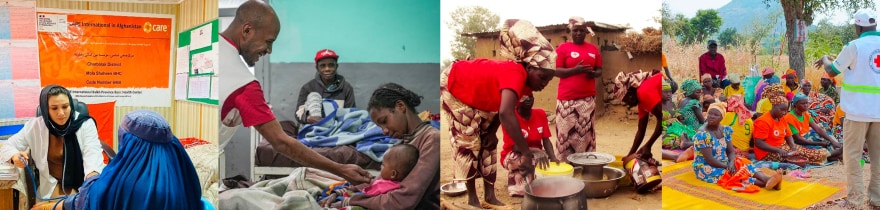
To support populations affected by these "forgotten crises", the Rescue & Recover Fund is mobilising alongside its NGOs partners – CARE, the French Red Cross and Doctors Without Borders – to provide humanitarian aid, through concrete, high-impact projects:
- CARE delivers health, nutrition, and psychosocial support – primarily to women and girls – in Afghanistan’s Khost province;
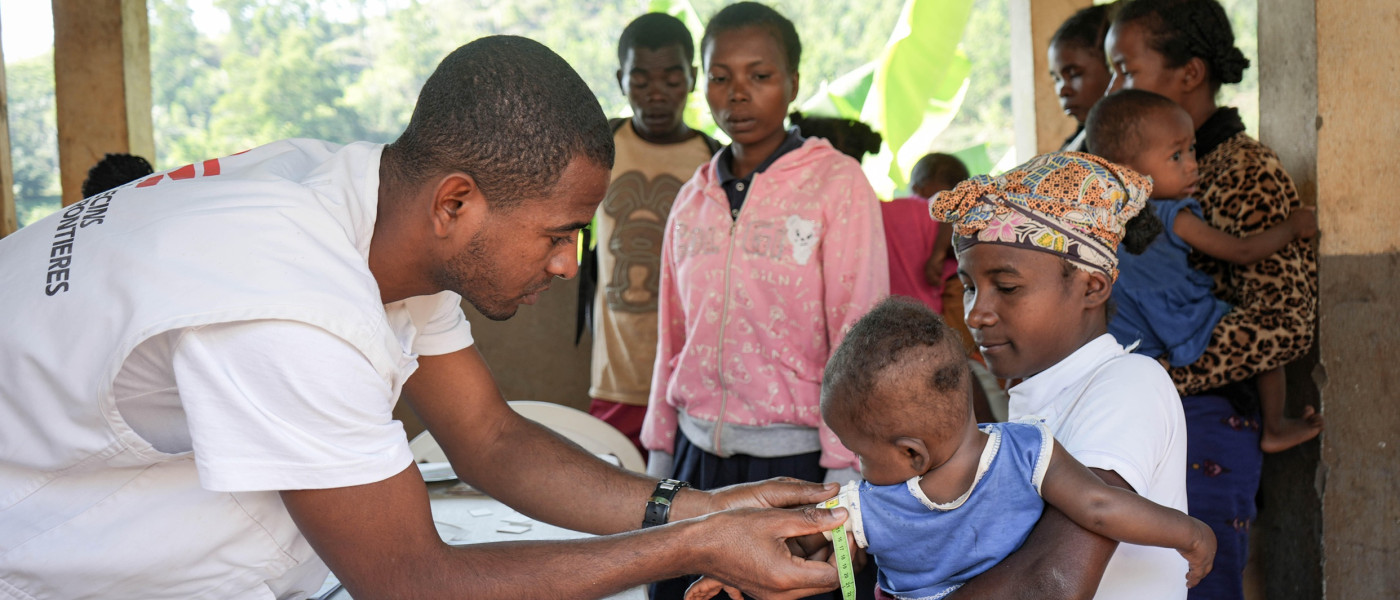
- Doctors Without Borders guarantees free healthcare as well as supports environmental initiatives in favour of greater access to water and promotes sustainable livelihoods in Madagascar’s Ikongo district;
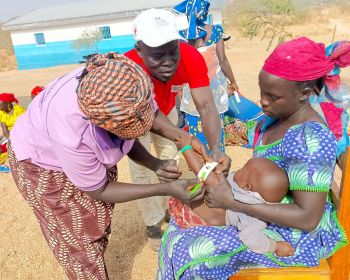
- French Red Cross combats gender-based violence and protects women and girls (those most commonly targeted by this violence), in Mauritania, through initiatives including training for healthcare professionals and dedicated support for vulnerable women ; the NGO fights malnutrition with a focus on infants under six months, as well as in hard-to-reach areas, in Chad and Cameroon.
Double your impact – for every donation made, the Group will match the donation amount: