Why is Maritime Transport Sector Considered Hard-to-Abate?
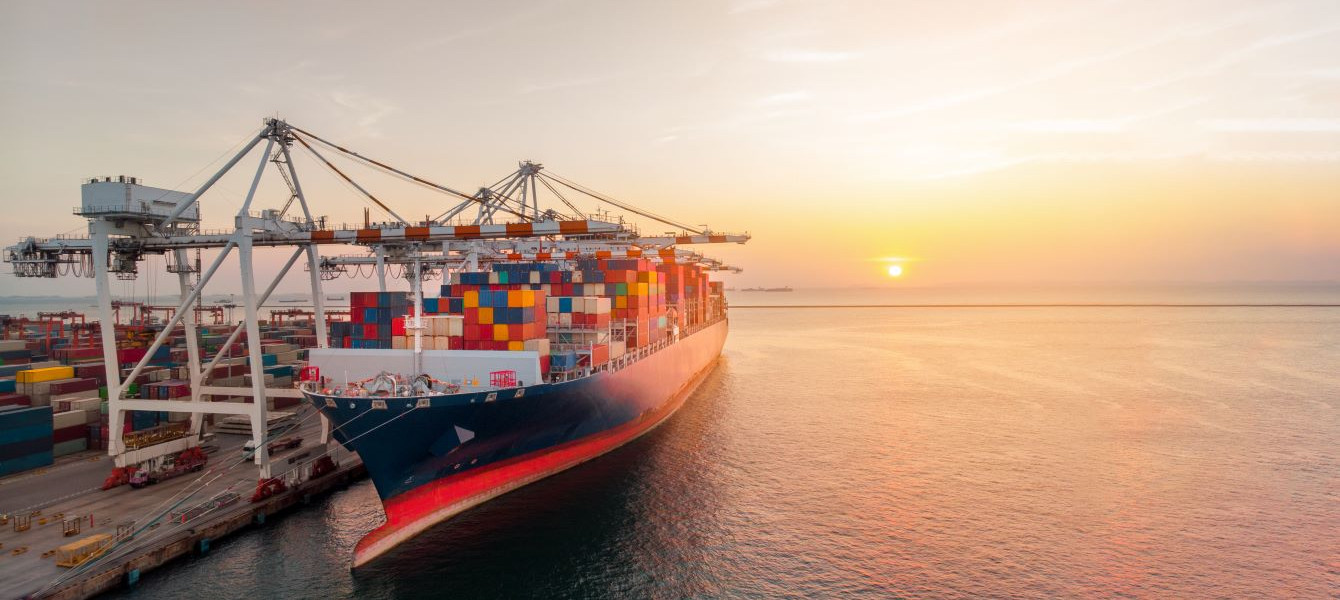
As the OECD points out, hard-to-abate sectors are those that “face particular challenges in their low-carbon transition. This can be either due to an absence of low-carbon alternatives or due to currently high costs of fully transitioning to low-carbon technologies and energy sources”. For the maritime transport sector, this classification is explained by three major factors: the absence of mature technological solutions, heavy reliance on fossil fuels, and the scale of the operational constraints associated with long-distance transport. Commercial ships require extremely high power to operate the high seas, over long distances and under severe weather conditions.
In April 2025, the International Maritime Organization (IMO) adopted a roadmap aimed at achieving net-zero greenhouse gas emissions from maritime transport by 2050. The maritime decarbonisation action plan includes interim targets of a 20% reduction by 2030 and a 70% reduction by 2040, compared with 2008 levels. It also provides for the introduction of marine fuel standards and a global greenhouse gas pricing mechanism designed to incentivise shipowners to transition to cleaner fuels.
However, divergence in position among certain IMO member states during negotiations led to a one-year delay in the formal adoption of the plan (initially scheduled for October 2025, with entry into force now expected from 2028 onwards).
The necessary transformation of the maritime industry is therefore not without challenges. As Bertrand Dehouck, Global Head of Transportation Capital Markets at BNP Paribas CIB, explains: "The decarbonisation trajectory of the shipping industry depends on exogenous factors, such as the availability of low-carbon fuels or vessel sailing speeds. Add geopolitical disruptions on one hand and evolving IMO regulations on the other, and the result is a highly complex landscape.”

Support the Decarbonisation of the Shipping Portfolio
"Despite the current context, which is putting pressure on the sector's climate trajectories, the Group continues to support the decarbonisation of maritime transport and has set clear targets for its own portfolio," continues Bertrand Dehouck. Since 2019, BNP Paribas has been a signatory to the Poseidon Principles – the leading international framework for climate alignment in shipping. In this context, the Group aims to reduce the carbon intensity of its shipping portfolio by 23% to 32% by 2030 compared with 2022 levels.
To measure its emissions, the Group applies a harmonised carbon-intensity metric across its entire portfolio, expressed in grams of CO₂ equivalent per tonne of deadweight (a vessel’s maximum carrying capacity) multiplied by nautical miles, in line with international standards. This methodology focuses on the operational use of financed vessels – whether container ships or bulk carriers – as their operation accounts for nearly 95% of lifecycle emissions.
CO2 intensity of financing for the shipping sector
Finance Low-Carbon Innovations to Transform the Maritime Value Chain
As early as 2019, the BNP Paribas group set itself the objective of supporting its maritime transport clients in the ecological transition of their fleets, committing one billion euros in financing – a target that has now been largely exceeded. However, as Bertrand Dehouck points out, "in shipping, not all levers are in the hands of financiers": the sector itself must take the lead in its decarbonisation, thinking through its transformation step by step.
Among the crucial solutions for decarbonising the sector, the transformation of port infrastructure is key. In Australia, for example, BNP Paribas participated – alongside ten other banks, in a AUD 475 million Sustainable Linked Loan (SLL) to help finance the electrification of the Port of Melbourne. The objective? To enable vessels to plug into onshore power while docked and switch off their engines at berth, thereby significantly reducing greenhouse gas emissions.
The port is also exploring the development of bunkering infrastructure for green methanol, produced from hydrogen or biomass, which can be used as an alternative marine fuel. Indeed, replacing fossil fuels with renewable alternatives remains one of the major challenges facing the industry’s decarbonisation.
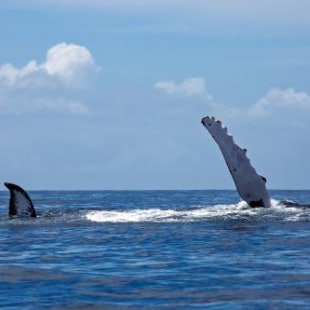
The low-carbon transition of maritime transport therefore requires the mobilisation of the entire value chain - from port infrastructure and fuel production and use, to ship design itself. The Bank supports innovative companies that are rethinking their manufacturing processes to make them more energy-efficient and less carbon-intensive. The French start-up Bluefins, backed by BNP Paribas Développement, has designed a robotic fin installed at the stern of commercial vessels. Using a patented propulsion system that mimics the efficient movement of a whale’s tail, it harnesses wave energy to support propulsion. This system can reduce vessels’ fuel consumption by up to 20%.
"When we assess potential investment in Bluefins, the positive impact of their model is immediately evident and becomes a key strength of the case alongside the purely financial considerations. Our role is to support them by sharing our expertise, connecting them to our ecosystem and helping them structure their CSR approach to further amplify this impact," explains Lucas Scherrer, Sustainability Manager at BNP Paribas Développement, a BNP Paribas subsidiary that invests the Group’s own capital to support growth of SMEs, mid-sized companies and high-potential start-ups.
Harnessing natural elements such as wind to propel ships – by returning to sail propulsion, an age-old expertise that urgently needs to be revived for commercial shipping – is another promising pathway. BNP Paribas supports several companies involved in the construction of wind-propelled vessels, including the maritime company Jifmar and the start-up OceanWings.
The development of hybrid solutions combining energy efficiency and technological innovation is therefore key to reducing the carbon footprint of vessels. BNP Paribas also supports D-Ice, a French company offering advanced navigation systems that help shipowners secure and optimise routes, thereby reducing fuel consumption. Through its Act for Impact programme, dedicated to innovative entrepreneurs, the Bank supports the deeptech in developing cutting-edge technologies, notably by financing their substantial R&D and innovation efforts.
"The decarbonisation of maritime transport is a complex undertaking, subject to multiple constraints such as technological maturity and the availability of certain alternative fuels. Nevertheless, it remains essential and strategic to ensure sustainable competitiveness, and the industry is committed to this transition. The financial sector has a role to play – both in supporting shipowners' investments to scale up solutions and in fostering the broader ecosystem and key infrastructures required to turn this ambition into reality."