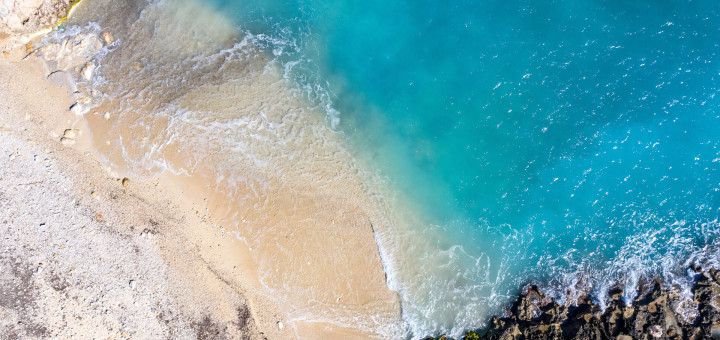
For its 6th edition, the BNP Paribas Foundation is dedicating its “Climate & Biodiversity Initiative” program to the Ocean and coastal ecosystems, thanks to the “Ocean Decade” label awarded by the Intergovernmental Oceanographic Commission of UNESCO.
Submissions were open from January 21 to May 4, 2025. Among the candidates, a selection of 11 projects carried out by scientific teams working to preserve the climate and marine biodiversity were chosen.
The BNP Paribas Foundation continues its commitment to scientific research and the protection of the Ocean, supporting more than 46 international teams since 2010.
A pioneering program, a deeper pledge
With €7 million pledged over three years (2026–2028), an increase of one million euros compared to the previous call for projects, the BNP Paribas Foundation will support 11 research projects selected from over 160 applications from 21 countries. Since 2010, €31 million will have been devoted to scientific research on climate and biodiversity, making the Climate & Biodiversity Initiative the largest environmental philanthropy program in France.
The final selection was made by an international scientific committee composed of 9 renowned experts (from institutions such as the National Center for Scientific Research – CNRS, the Research Institute for Development – IRD, and the University of Würzburg), based on criteria of scientific excellence, impact, and innovation.
The winning projects cover a wide range of geographies (Senegal, Gulf of Guinea, Mediterranean, Arctic, Northeast Pacific, Coral Triangle, Réunion Island…) and topics: marine megafauna, oyster farming, abyssal biodiversity, Arctic microbiome, corals, phytoplankton, benthic organisms, global fisheries… This diversity illustrates both the urgency to act and the ability of research to illuminate future solutions, close to territories, communities, and threatened ecosystems.
“Through this BNP Paribas Foundation program, we have chosen to respond to the climate emergency with action by supporting scientific research on the Ocean and coastal ecosystems, because preserving these essential environments also means protecting the resources and balances on which our collective future dependss.” Isabelle Giordano, Executive Director of the BNP Paribas Foundation, Head of Philanthropy for BNP Paribas Group
The 11 new research projects for the 2026–2028 edition
The supported projects will help better understand the impacts of climate change on the Ocean, develop concrete solutions for the resilience of marine ecosystems, and involve local communities in the preservation of life.
Abyscapes (Abyss) – Spain Studies the resilience of deep-sea biodiversity in the Northeast Pacific, combining genomics, modeling, and ecology to inform conservation strategies. | |
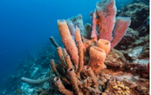
Coralresist (Corals) – France Analyzes the resistance mechanisms of corals in the Coral Triangle to climate warming, to guide global conservation efforts. | |
FishMIP-OSP (Global marine ecosystems) – France Develops scenarios and simulations to anticipate the future of marine ecosystems and global fisheries, integrating climate and socio-economic dimensions. | |
Marine Microswimmers (Microbial biodiversity) – France Explores how mobile microorganisms enhance the resilience of corals, sponges, and seagrasses, aiming to develop natural solutions for restoring marine ecosystems. Led by IRD – Entropie | |
Med-Guard (Estuarine ecosystems) – France Assesses the impact of climate change on Mediterranean groundwater and its microbial biodiversity, to promote sustainable management of coastal areas. | |
Micro-Arctic (Microbial Biodiversity) – France Studies the diversity and adaptation of the Arctic microbiome to warming, to improve climate models and conservation of polar ecosystems. | |
Phytoscope (Phytoplankton) – France Observes and models phytoplankton biodiversity in a changing Ocean, to anticipate future developments and guide public policies. | |
Safeguarding Oceanpath (High seas and coastal ecosystems) – Portugal | |
Show-It (Small spotted catsharks) – Portugal Assesses the effects of warming on the development of small spotted catsharks, to better understand their resilience and guide the creation of marine protected areas. Led by BIOPOLIS Association | |
Supercor-AI ((Corals) – France (Réunion Island) Uses genomics and artificial intelligence to identify and restore corals resistant to bleaching, contributing to reef conservation. Led by CORECIF | |
Yokhoss (Oysters) – France/Sénégal Develops sustainable and resilient oyster aquaculture in Senegal, combining biodiversity science, nutrition, and health to strengthen food security. |

For more information on each project, the winning teams, involved partners, and detailed scientific challenges, please request the full press kit. Visuals, infographics, and researcher interviews available upon request.
Follow the latest Environmental news from the BNP Paribas Foundation on its website and on social media: #ClimateBiodiversityInitiative #OceanDecade
--
Press Contact – BNP Paribas Foundation / Agence F
Florence Bardin – florence.bardin [at] agencef (dot) com - + 33 (0)6 77 05 06 17
Solène Roux – solene.roux [at] agencef (dot) com - + 33 (0) 7 63 32 26 67
Under the aegis of the Fondation de France, the BNP Paribas Foundation has been a major player in corporate philanthropy for over forty years. It also coordinates the international development of BNP Paribas Group’s philanthropy wherever the Bank is present. The BNP Paribas Foundation pursues a multidisciplinary approach to philanthropy, supporting innovative projects dedicated to solidarity, environment, and culture. Attentive to the quality of its commitment to its partners, the BNP Paribas Foundation ensures long-term support for their projects. Since 1984, the Foundation has supported nearly 2 million beneficiaries and more than 4,200 projects, including 3,600 social and solidarity initiatives, 50 climate and biodiversity research programs, and 500 cultural projects in France and worldwide. For more information about the BNP Paribas Foundation, click here.
Contact

- IT
- AI
- Data
- Cloud
- Cyber
- Blockchain