
On set: how does a film stand the test of time?
No film is born a classic. It becomes one over time, as successive generations embrace it and it leaves a lasting imprint on their memories. Heritage film festivals play a vital role in that process, bringing films back to the big screen, inviting fresh perspectives and ensuring they are passed on to new audiences. The Institut Lumière embodies this mission through its programmes and events dedicated to cinematic heritage.
From production to exhibition, BNP Paribas supports films at every stage of their journey. That support does not end with a film's theatrical release: the Group also backs heritage film festivals, helping keep these works alive and secure their place in the history of cinema. To better understand what enables a film to stand the test of time, We Love Cinema spoke to Irène Jacob, President of the Institut Lumière.
When films are made with genuine sincerity and from a deeply personal perspective, they transcend eras and borders to become timeless. They can be seen anywhere in the world and resonate with audiences in a deeply personal way.
Lumière Festival 2026: Lyon celebrates heritage cinema
From 10 to 18 October 2026, the Lumière Festival will turn Lyon into the world capital of heritage cinema. Over nine days, festivalgoers will enjoy nearly 450 screenings across around 50 venues, featuring restored masterpieces, tributes to some of cinema's greatest figures, retrospectives and talks. The highlight of this 18th edition will see filmmakers Joel and Ethan Coen receive the 2026 Lumière Award, recognising four decades of filmmaking.
BNP Paribas has supported the Lumière Festival since it was founded in 2009. That commitment even extends to one of the Group's branches on Avenue des Frères Lumière in Lyon, whose design pays tribute to the long-standing relationship between BNP Paribas and the world of cinema.
Film financing: tomorrow's classics are funded today
Every film begins as a leap of faith: a screenplay, an artistic vision and one great unknown, whether it will find its audience. Financing provides the means to bring a film from script to screen. BNP Paribas is involved from this very first stage, supporting producers and directors when everything is still to be written. Some films become instant successes, others are rediscovered years later. A select few go on to earn a lasting place in cinema history.
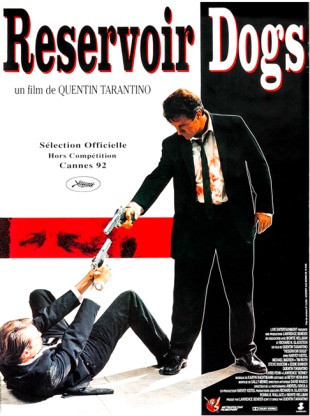
From “Reservoir Dogs” to the Lumière Award
In 1992, Quentin Tarantino was 29 years old and had no films to his credit. While working in a California video store, he wrote the screenplay for “Reservoir Dogs” in just three weeks and initially only planned a short film, because he lacked the funding. Everything changed when Harvey Keitel, one of Martin Scorsese's long-time collaborators, agreed not only to star in the film but also to co-produce it.
Paribas USA decided to back the project financially, despite its uncertain prospects. Premiered at the Sundance Film Festival before being presented at Cannes the same year, “Reservoir Dogs” quickly established itself as a cult movie, marking the start of a remarkable career for its director. Twenty-one years later, Quentin Tarantino received the Lumière Prize in Lyon, cementing his status as one of the world's leading filmmakers.
Now showing: films financed by BNP Paribas
Each year, BNP Paribas renews that commitment by helping finance almost one in every two films produced in France through its Image & Media Business Centre and its subsidiaries Cofiloisirs and Cinécapital. With decades of experience in the industry, the Group supports filmmakers at every stage of the filmmaking process.
This year, the Group helped fund the five films selected to represent France at the Oscars in the Best International Feature Film category: “The Battle of de Gaulle: The Iron Age”, “Iron Boy”, “La Gradiva”, “The Unknown” and “Minotaur”. They all premiered at the 2026 Cannes Film Festival, where some picked up awards. It is ultimately “Minotaur” by Andrei Zvyagintsev, winner of the Festival’s Grand Prix, which will fly the French colours at Los Angeles on 14 March 2027.
First feature films, popular comedies, documentaries, or even auteur films: among the films supported by the Group today may well be the classics of tomorrow. Discover the films released between 1 September and 31 December 2026 with the support of BNP Paribas.
-
La dernière patiente
by Rémi Bassaler -
Les héros du Louvre
by Elie Chouraqui -
Les survivants du Che
by Christophe Dimitri Reveille -
Bille Melody
by Christine Paillard -
Adieu monde cruel
by Félix de Givry -
Garance
by Jeanne Herry -
Justin le Juste
by Eric Barbier -
Notre Salut
by Emmanuel Marre -
Fausse note
by Alexandre Arcady -
Ducobu et le fantôme de Saint Potache
by Elie Semoun -
L'espèce explosive
by Sarah Arnold -
Minotaure
by Andreï Zviagintsev -
La Gradiva
by Marine Atlan -
Moulin
by Laszlos Nemes -
Quelques mots d'amour
by Rudi Rosenberg -
15/18
by Cedric Kahn -
Jupiter
by Alexandre Smia -
Congo Boy
by Rafiki Fariala -
Forty Love
by Pierre-Ange Carlotti -
Du fioul dans les artères
by Pierre le Gall
-
La dernière patiente
by Rémi Bassaler -
Mémoire de fille
by Judith Godrèche -
Kraken
by Mohamed Chabane & Théo Jourdain -
Notre Salut
by Emmanuel Marre -
Ni vue, ni connue
by Marc Fitoussi -
Le Corset
by Louis Clichy -
Une femme aujourd'hui
by Robert Guediguian -
La Gradiva
by Marine Atlan -
Moulin
by Laszlos Nemes -
L'affaire Marie-Claire
by Lauriane Escaffre & Yvo Muller -
15/18
by Cedric Kahn -
Les yeux verts
by Fanny Liatard & Jeremy Trouilh -
Du fioul dans les artères
by Pierre le Gall
Cinema & Society: when a film finds its audience
With over 136 million cinema admissions in France recorded since the beginning of the year (a 25% increase compared to 2025), cinemas are proving that nothing can replace the magic of a movie screening. Behind those figures are cinema-goers, whose choices over time determine which films endure. Keeping our cinematic heritage alive also means bringing films closer to audiences. BNP Paribas plays a role at every stage of that journey: financing films, widening access to them, bringing them back to the big screen and supporting the cinemas where the magic of film is shared.
-
Supporting the cinemas of tomorrow
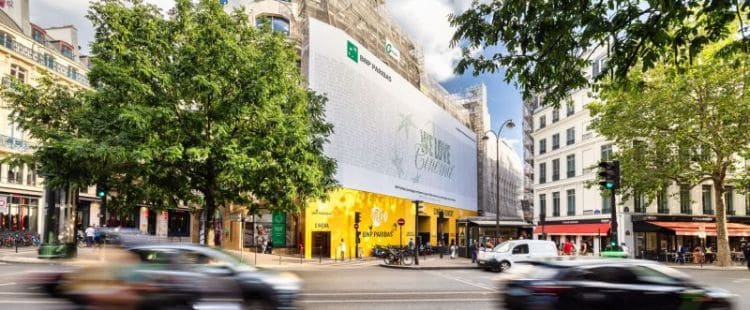
It is in cinemas that films truly come into their own, find their audience and, years later, may be rediscovered by new generations. BNP Paribas supports cinema operators in their renovation and transformation projects, like the Pathé BNP Paribas in Paris. The Group helps finance one in every two cinemas in France. In Italy, BNL BNP Paribas also supports iconic venues in Rome such as the Azzurro Scipioni and the Cinema Troisi.
-
Partnering with ambitious and bold projects
Nearly 6 million people in France went to see the two-part biopic “The Battle of De Gaulle” in cinemas. As the film's sole banker and official partner, BNP Paribas supported this historical epic from the outset, at a time when its success was far from certain. One of today's films may yet become one of tomorrow's classics, just like many of the other productions the Group supports each year.

-
Sharing the emotions of cinema
Each year, BNP Paribas invites nearly 100,000 people to the cinema worldwide, including 75,000 in France. Many of these invitations are offered through popular events such as La Fête du Cinéma in France and the We Love Cinema Days organised by BNP Paribas Fortis in Belgium, giving people the chance to discover today's films — and perhaps tomorrow's classics.

-
Preserving cinema's legacy
Preserving cinema's heritage also means giving people access to films and to the history of cinema. BNP Paribas is a patron of the Cinémathèque française, one of the leading institutions for preserving and sharing the memory of cinema. From 7 October 2026, the exhibition dedicated to Jean-Paul Belmondo will give the public a chance to rediscover a major figure in French cinema and his films that have marked generations.

-
Bringing cult films back to life on the big screen
Launched in 2022 in France, the BNP Paribas CinéCulte screenings bring back to life, on the big screen, films that have become classics, with free screenings open to the public through a prize draw. The 2025 edition celebrated the world of James Cameron and several of his iconic films. The next edition will return in 2027 with another selection of cult classics to (re)discover on the big screen!



A date in cinema history: 2003, when Chaplin returned to the big screen
Films are not immortal. Film stock deteriorates, colours fade and formats eventually become obsolete. Without restoration, even the greatest classics disappear from our screens—not because audiences stop loving them, but because there are no longer any copies left to show.
That is what made it possible for “Modern Times” to return to the big screen. In 2003, BNP Paribas was among the partners in its restoration, and the restored copy was screened at the closing ceremony of the Cannes Film Festival almost 70 years after the film's release. A new life for a work that has become an integral part of our collective memory.
Technology may have evolved, but the need to preserve films remains unchanged. From the treasures of the past to the classics of tomorrow, BNP Paribas continues to support the film industry as it evolves, standing alongside the people who will shape its future.