
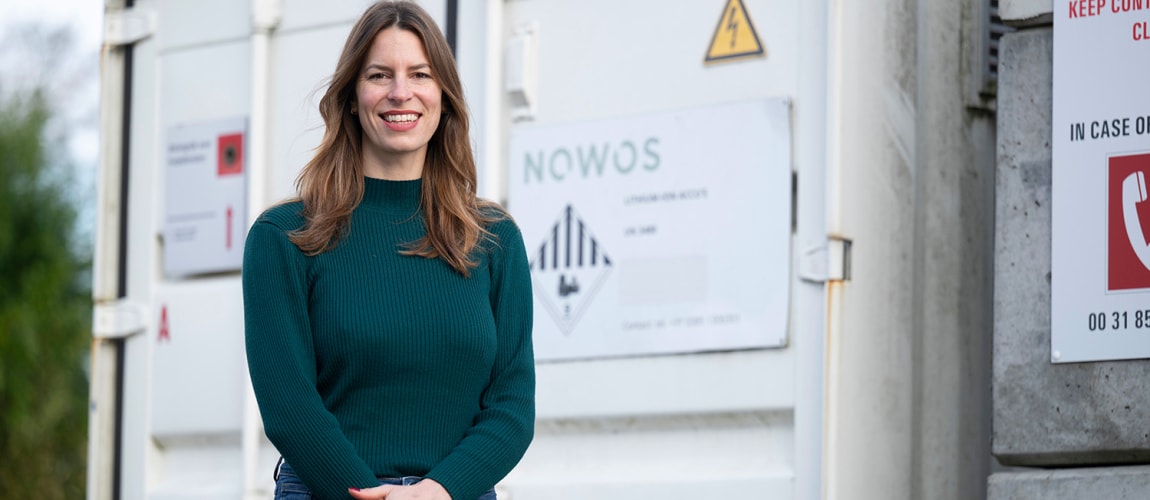
Can you tell us about NOWOS?
Alix Armour: We started from an observation: lithium-ion cells last 10 to 15 years, but the batteries often go for recycling much earlier. And in most cases because of purely mechanical malfunctions: a de-soldered connector, a damaged box. NOWOS collects these batteries throughout Europe for partner companies, diagnoses them and repairs them with original parts, to maintain their certifications. This is an essential point of vigilance, especially for large companies, because a battery modified with non-compliant parts loses its approvals. We started by working on micro-mobility (scooters, electric bikes) and we are now extending our field of intervention to industrial batteries, which can be worth up to 10,000 euros. Repairing them for 1,000 euros rather than replacing them is an immediate economic argument! In total, we have repaired more than 300,000 batteries to date.
What is the nature of your links with BNP Paribas?
Alix Armour: We are a BNP Paribas client and a member of the Bank's Rhône-Alpes Innovation Business Centre. Our purpose and mission around mobility, energy and impact fitted well to the type of companies that the Group seeks to support within its banking network.
In concrete terms, what has this relationship brought you?
Alix Armour: Being a client of the Bank obviously means first and foremost benefiting from the breadth of its banking and financial services. BNP Paribas, with the help of BPI, is supporting NOWOS in the financing of its development projects in France, thus creating local jobs in the Rhône-Alpes region and increasing the impact of NOWOS in its ambition to improve the circularity of Li-ion batteries.
But BNP Paribas also gives us the opportunity to be put in the spotlight or to benefit from networking. Our relationship with the Bank gives us valuable notoriety to make our expertise known, which is particularly important in order to be able to weigh in on the regulatory debates on battery repair.
I can give you an example that recently stood out to me: during a round table on AI at VivaTech 2026, to which we were invited on the BNP Paribas stand, we and the other participants focused on a key point that we have been defending for a long time. AI is not just software: it needs a stable energy infrastructure to function. Servers and data centres consume massively and need a continuous power supply, and therefore batteries. This link between AI and the type of energy needed to operate it is still not present enough in the debates. Being part of the BNP Paribas ecosystem allows us to highlight it.
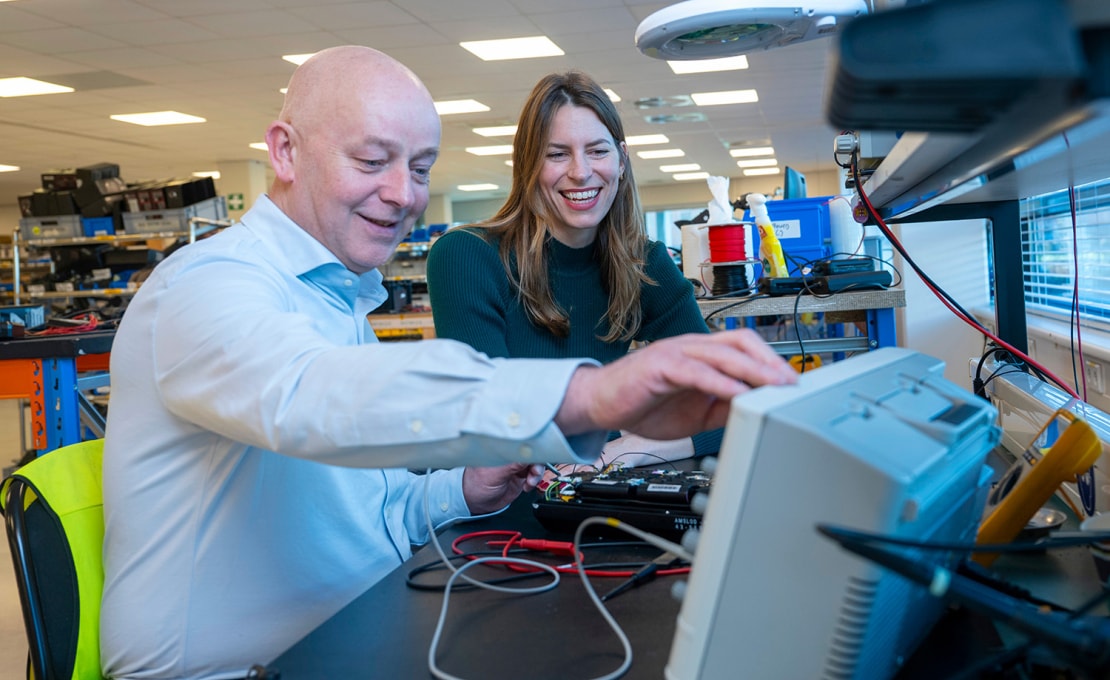
Alix Armour with Prins Doornekamp CEO of NOWOS.
What are your upcoming projects?
Alix Armour: The European battery regulation*, which gradually imposes traceability requirements and introduces "battery passports", will profoundly transform the market: it will be mandatory to provide batteries with accessible historic, spare parts will be more accessible, and repair will be facilitated. Our ambition is to move from curative repair to preventive maintenance. To do this, we are building a unique database in Europe on battery repair, the full potential of which is not yet measured. In a context of geopolitical tensions around critical raw materials, circularity is no longer just an environmental issue, but more broadly a matter of sovereignty.
*Regulation (EU) 2023/1542 of the European Parliament and of the Council of 12 July 2023